
Fall Prevention & Home Safety for Seniors
At Golden Years Guru, we provide practical advice on fall prevention, home safety, and wellness strategies. Our goal is to empower seniors to live independently and confidently in their own homes.
David George
1/8/20262 min read
A fall can happen in a split second: one wet tile, one missed stair edge, one icy step at the door. For older adults, that “small” moment can turn into weeks of pain, lost mobility, or a long recovery that changes daily life. The good news is that falls are not an inevitable part of aging—and many are preventable with smart, practical changes.
Why falls are such a big deal for older adults in Canada
Across Canada, falls are a growing public health concern. Government of Canada data shows that deaths due to falls among adults 65+ increased 51% between 2017 and 2022 (from 4,752 to 7,182). Over a longer period, fall-related hospitalizations rose 47% between 2008 and 2019 (from 49,152 to 72,392, with some exclusions noted in the data).
Falls aren’t just common—they’re expensive and disruptive. In Canada, falls are repeatedly identified as a leading cause of injury-related death, hospitalization, and emergency department visits among older adults.
And the financial impact is huge: one national estimate puts the cost of falls among older adults at $5.6 billion (2018).
Why Ontario seniors face extra fall risks
Ontario adds a few realities that increase risk—especially for people aging at home:
Winter conditions (ice, packed snow, slush) at entrances and driveways
Wet flooring inside from boots and melting snow
Stairs in many homes (including older builds, split levels, and basements used for laundry/storage)
Nighttime bathroom trips, often in low light
One Ontario-focused fall-prevention position paper reported that in 2014/15, over 250,000 Ontario seniors visited the emergency room due to a fall, and over 60,000 were hospitalized due to falls.
(Those numbers are not “new,” but they’re a clear indicator of the scale of the issue—and they help explain why fall prevention is such a priority in Ontario.)
The “hidden” places falls happen most often
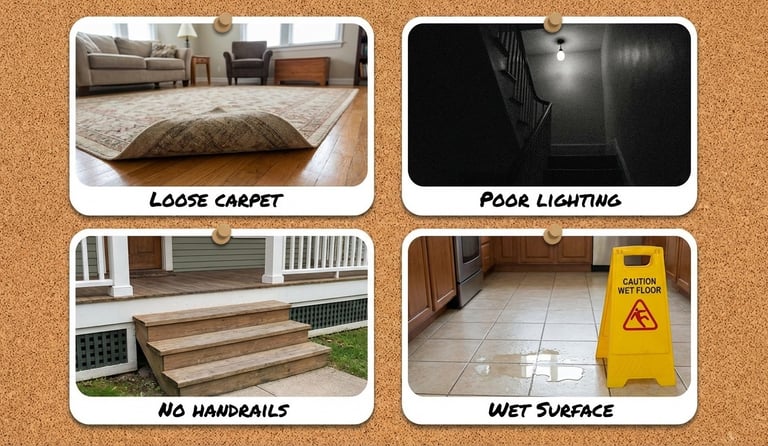
Most falls don’t happen during extreme activities. They happen during normal life:
Bathroom (wet surfaces + tight turning spaces)
Stairs (lighting + missed steps + no sturdy handhold)
Bedroom-to-bathroom route (darkness + grogginess)
Kitchen (reaching, rushing, carrying, slippery spills)
Entryways (ice outside, wet floors inside)
If you’re aging in place—or helping a parent—these are the areas to prioritize first.
Help
Questions about senior health? Reach out.
Contact
Subscribe
Contact@gyguru.com
© 2025. All rights reserved.